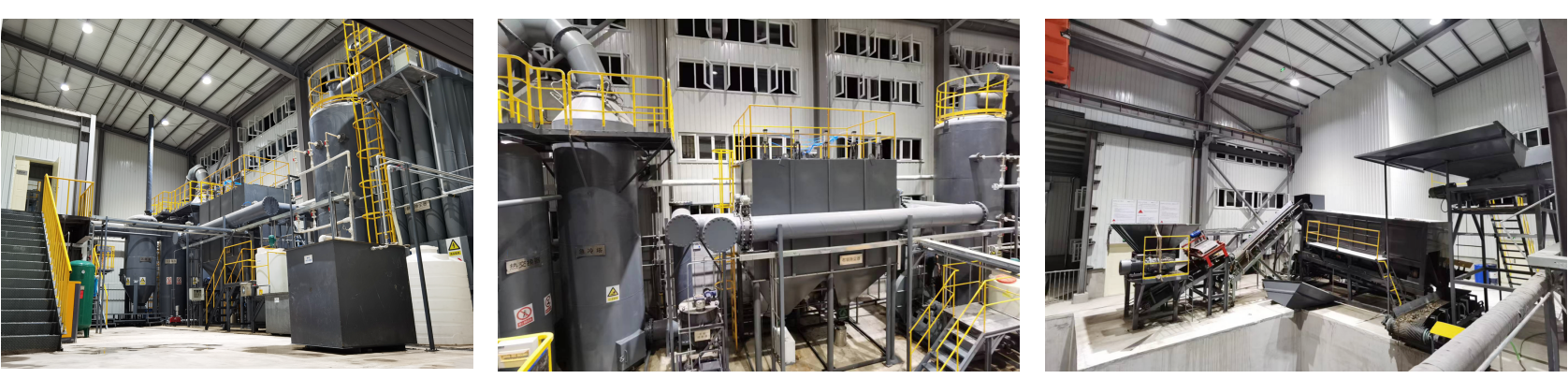


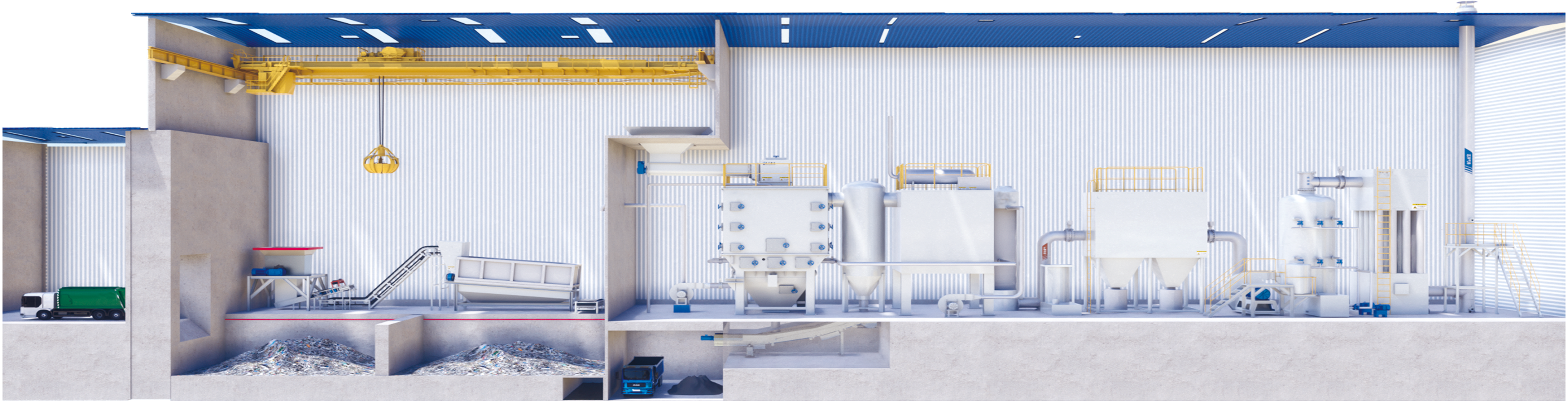
It adopts an “on-site treatment + waste-to-energy” model and deploys regional on-site waste incineration units. After volume reduction via high-temperature incineration, the waste can recover heat energy (for building kitchen and bathroom hot water) or be converted into electricity (for regional lighting and equipment), satisfying current demands while allowing for future expansion.
The system achieves a waste reduction rate ≥90%, reducing landfill volume and transportation pressure. Replacing the traditional off-site hauling and landfill model, it significantly cuts carbon emissions. On-site treatment also reduces transportation costs and road occupancy. By establishing a closed loop of “waste → heat energy → usable energy”, it truly realizes waste-to-energy conversion.
Low Operating Cost
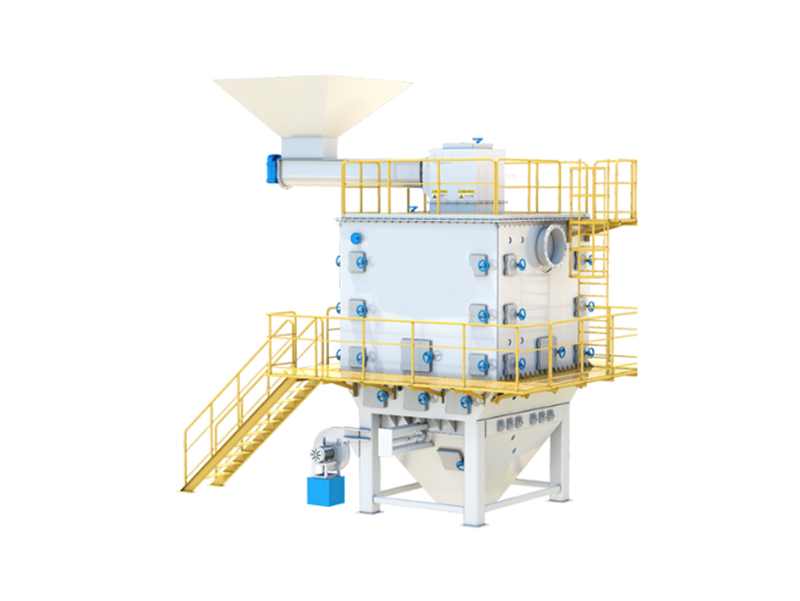
The gasifier adopts an integrated primary/secondary combustion chamber design, which effectively improves heat storage capacity. The hot air recovered from waste heat is used for thermal oxygen supply to the secondary combustion chamber, achieving fuel-free operation. The reaction process features low NOₓ generation, eliminating the need for denitrification treatment and reducing both operating and construction costs. The overall operating cost of the equipment is significantly lower than similar products.
Excellent Treatment Performance
The volume reduction rate of waste fed into the furnace can reach over 95%, and the weight reduction rate can reach over 90%.
Environmentally Friendly
The unloading workshop is fully enclosed and maintained under slight negative pressure to prevent odor leakage. Leachate is collected and re-sprayed into the furnace for disposal, achieving zero wastewater discharge. Two-stage deacidification and two-stage dust removal ensure ultra-clean flue gas emission.
Flue gas emissions meet regulatory requirements. The hot water generated is used for heating, realizing resource utilization.
Intelligent Automation
The central control room enables start/stop control of most equipment, as well as automatic water replenishment and dosing.
Various online instruments for temperature, pressure, oxygen content, etc., are installed to monitor the system operation status in real time.
An intelligent operation and maintenance service platform supports remote monitoring.
|
Model |
Annual Processing Capacity (t) |
Equipment Weight (t) |
Total Power (kW) |
Equipment Footprint (m²) |
Plant Footprint (m²) |
Service Population (Person) |
|
M-MI3 |
≥990 |
30 |
50 |
100 |
250 |
6,000 |
|
M-MI5 |
≥1,650 |
45 |
85 |
170 |
300 |
10,000 |
|
M-MI10 |
≥3,300 |
50 |
135 |
200 |
500 |
20,000 |
|
M-MI15 |
≥4,950 |
65 |
158 |
300 |
750 |
30,000 |
|
M-MI20 |
≥6,600 |
70 |
186 |
350 |
850 |
40,000 |
|
Customized processing capacities are available. |
||||||